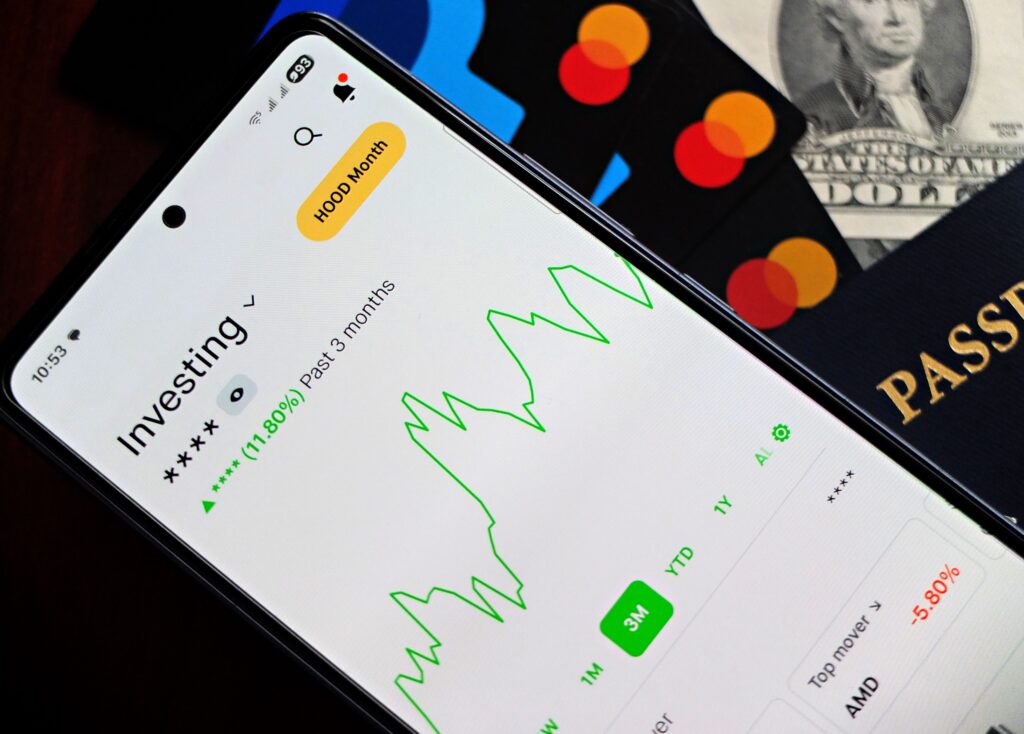
I used to think investing was only for wealthy people with thousands of dollars to spare. For years I watched my money sit in a low interest savings account earning almost nothing while inflation quietly ate away at its value. When I finally discovered that I could start investing with just $100 everything changed. In this guide I share exactly what I learned about starting to invest with a small amount and how you can begin growing your wealth today regardless of how little you have to start with.
I used to think investing was only for wealthy people with thousands of dollars to spare. For years I watched my money sit in a low interest savings account earning almost nothing while inflation quietly ate away at its value. When I finally discovered that I could start investing with just $100 everything changed.
The truth is you do not need a lot of money to start investing. What you need is knowledge the right platform and the discipline to start early and stay consistent. In this complete beginner’s guide we cover everything you need to know to start investing with $100 today.
Why You Should Start Investing Now
Every day you delay investing is a day of potential growth lost. The most powerful force in investing is compound interest the process of your returns generating their own returns over time.
Here is what $100 per month invested consistently can grow to:
| Years Invested | Total Contributed | Value at 7% Return |
|---|---|---|
| 10 years | $12,000 | $17,308 |
| 20 years | $24,000 | $52,093 |
| 30 years | $36,000 | $121,997 |
| 40 years | $48,000 | $262,481 |
That is the power of starting early. The same $100 per month invested for 40 years instead of 20 years is worth five times as much not because you contributed more but because time allows compound interest to work its magic.
Before You Start Investing
Before putting any money into investments make sure these foundations are in place:
Build a small emergency fund first
Keep 3 to 6 months of expenses in a high yield savings account before investing. Without an emergency fund one unexpected expense forces you to sell investments at the wrong time potentially at a loss.
Pay off high interest debt first
If you have credit card debt at 20 percent interest paying it off gives you a guaranteed 20 percent return better than almost any investment. Pay off high interest debt before investing.
Have stable income
Investing requires consistency. Make sure your income is stable enough to commit to regular investment contributions.
If all three boxes are checked you are ready to start investing.
Key Investing Concepts Every Beginner Needs to Know
Compound Interest
Einstein reportedly called compound interest the eighth wonder of the world. When your investments earn returns those returns generate their own returns creating exponential growth over time. The longer your money is invested the more powerful compounding becomes.
Diversification
Never put all your eggs in one basket. Spreading investments across different assets companies and sectors reduces risk. If one investment loses value others may gain protecting your overall portfolio.
Risk and Return
Higher potential returns always come with higher risk. Cash in savings is safe but grows slowly. Stocks have higher potential returns but can lose value in the short term. Understanding your personal risk tolerance helps you choose the right investments.
Dollar Cost Averaging
Investing a fixed amount regularly regardless of market conditions for example $100 every month is called dollar cost averaging. When prices are low you buy more shares. When prices are high you buy fewer. Over time this strategy reduces the impact of market volatility.
Time in the Market vs Timing the Market
Research consistently shows that staying invested over long periods outperforms trying to buy and sell at the perfect times. Time in the market beats timing the market every time for most investors.
Best Investment Options for Beginners With $100
Index Funds
Index funds are the single best investment for most beginners. An index fund holds a collection of stocks that track a market index like the S&P 500 the 500 largest companies in America. When you invest in an S&P 500 index fund you own tiny pieces of 500 of the world’s biggest companies.
Why index funds are perfect for beginners:
- Instant diversification across hundreds of companies
- Very low fees typically 0.03 to 0.20 percent per year
- No need to pick individual stocks
- Historically average 7 to 10 percent annual returns over long periods
- Warren Buffett recommends them for most investors
How to invest: Open an account with Vanguard Fidelity or Schwab and invest in their S&P 500 index fund.
Exchange Traded Funds (ETFs)
ETFs are similar to index funds but trade on stock exchanges like individual stocks. They offer the same diversification and low costs as index funds with slightly more flexibility.
Popular beginner ETFs:
- VOO — Vanguard S&P 500 ETF
- SPY — SPDR S&P 500 ETF
- VTI — Vanguard Total Stock Market ETF
- QQQ — Invesco Nasdaq 100 ETF
Most ETFs can be purchased for the price of one share or less on platforms like Fidelity and Charles Schwab which offer fractional shares.
Robo Advisors
Robo advisors are automated investment platforms that build and manage a diversified portfolio for you based on your goals and risk tolerance. Perfect for beginners who want professional portfolio management without high fees.
Popular robo advisors:
- Betterment no minimum investment great for beginners
- Wealthfront $500 minimum strong planning tools
- Acorns rounds up purchases and invests the difference
Robo advisors typically charge 0.25 percent per year significantly less than traditional financial advisors who charge 1 percent or more.
Retirement Accounts: Roth IRA
A Roth IRA is one of the best investment accounts available to beginners. You invest after tax dollars and all growth and withdrawals in retirement are completely tax free.
Why a Roth IRA is perfect for young investors:
- Tax free growth over decades
- Tax free withdrawals in retirement
- Contribute up to $7,000 per year in 2024
- Can withdraw contributions (not earnings) anytime penalty free
- Ideal for anyone who expects to be in a higher tax bracket in retirement
Open a Roth IRA at Fidelity Vanguard or Charles Schwab with as little as $1.
High Yield Savings Account
Not technically an investment but a high yield savings account earning 4 to 5 percent is a safe starting point while you learn about investing. It beats regular savings accounts dramatically and your money is FDIC insured.
Best for: Emergency funds and money you might need within 1 to 2 years.
Micro Investing Apps
Micro investing apps are designed specifically for people who want to start investing with very small amounts:
Acorns
Rounds up every purchase to the nearest dollar and invests the difference. Buy a coffee for $3.50 and $0.50 gets invested automatically. Also offers a $5 per month subscription for a full investment account.
Stash
Allows you to start investing with just $1. Choose from hundreds of ETFs and stocks based on your interests and values.
Public
Commission free investing with fractional shares. Invest in stocks and ETFs with as little as $1. Social features let you see what other investors are buying.
How to Start Investing With $100 Step by Step
Step 1: Choose your account type
For most beginners start with a Roth IRA for long term retirement savings or a regular brokerage account for more flexible investing. If your employer offers a 401k with matching contributions start there first the match is free money.
Step 2: Choose your platform
- Fidelity: best overall for beginners. No minimums no fees fractional shares available.
- Charles Schwab: excellent for beginners with great customer service.
- Vanguard: best for long term index fund investors.
- Betterment: best robo advisor for complete hands off investing.
Step 3: Complete your application
Sign up online. You will need your Social Security number bank account information and basic personal details. Most accounts open within 1 to 2 business days.
Step 4: Transfer your $100
Link your bank account and transfer your initial $100. Most platforms have no minimum investment so you can start with exactly $100.
Step 5: Choose your investment
For most beginners invest in one of these:
- A total market index fund like FSKAX at Fidelity
- An S&P 500 index fund like FXAIX at Fidelity
- A robo advisor portfolio if you want completely hands off investing
Step 6: Set up automatic monthly contributions
Invest a fixed amount every month automatically. Even $25 to $50 per month added to your initial $100 builds significant wealth over time through compound growth.
Step 7: Leave it alone
Do not check your portfolio daily. Do not panic when the market drops it always recovers over long periods. The best investors are often the most boring investors who simply contribute regularly and never sell.
Common Beginner Investing Mistakes to Avoid
Waiting until you have more money
The best time to start investing was yesterday. The second best time is today. Even $50 invested now is worth dramatically more than $1000 invested five years from now due to compound growth.
Trying to pick individual stocks
Most professional fund managers fail to beat the market consistently. The odds of a beginner beating the market by picking individual stocks are extremely low. Index funds beat most stock pickers over long periods.
Selling when the market drops
Market downturns are normal and temporary. Investors who sell during market crashes lock in losses and miss the inevitable recovery. Stay invested through downturns.
Checking your portfolio too often
Daily portfolio checking leads to emotional decision making. Check your investments monthly or quarterly not daily.
Not starting a retirement account
The tax advantages of Roth IRAs and 401ks are enormous over decades. Always maximize tax advantaged accounts before investing in regular brokerage accounts.
Paying high investment fees
Investment fees compound just like returns but they work against you. An extra 1 percent in annual fees costs you tens of thousands of dollars over 30 years. Choose low cost index funds and ETFs.
How Much Should You Invest Each Month?
Financial experts typically recommend investing 15 percent of your income for retirement. But start with whatever you can and increase gradually.
| Monthly Income | 15% Investment | Starting Goal |
|---|---|---|
| $2,000 | $300 | Start with $50 |
| $3,000 | $450 | Start with $75 |
| $4,000 | $600 | Start with $100 |
| $5,000 | $750 | Start with $150 |
| $6,000 | $900 | Start with $200 |
The starting goal column shows a realistic first month contribution. Increase by $25 every few months until you reach the 15 percent target.
What $100 Per Month Can Grow To
Investing $100 per month consistently in an index fund averaging 7 percent annual returns:
| Years | Amount Invested | Portfolio Value |
|---|---|---|
| 5 years | $6,000 | $7,159 |
| 10 years | $12,000 | $17,308 |
| 15 years | $18,000 | $31,696 |
| 20 years | $24,000 | $52,093 |
| 30 years | $36,000 | $121,997 |
| 40 years | $48,000 | $262,481 |
Starting with just $100 per month you could have over $260,000 after 40 years. That is the power of starting early and staying consistent.
CONCLUSION:
Starting to invest is one of the most important financial decisions you will ever make. And you do not need thousands of dollars or special knowledge to begin. You need $100 a brokerage account and the commitment to contribute consistently over time.
Open a Fidelity or Vanguard account today. Invest your first $100 in an S&P 500 index fund. Set up a monthly automatic contribution of whatever you can afford. Then leave it alone and let compound interest do its work.
Your future self will thank you for starting today.
What is stopping you from starting to invest? Share in the comments we would love to help you take that first step!
Frequently Asked Questions
Q: How much money do I need to start investing?
A: You can start investing with as little as $1 on platforms like Fidelity and Charles Schwab which offer fractional shares. Many robo advisors like Betterment have no minimum investment at all. The most important thing is to start with whatever you have rather than waiting until you have more money.
Q: Is it safe to invest with only $100?
A: Yes especially when you invest in diversified index funds or ETFs rather than individual stocks. With $100 in an S&P 500 index fund you own tiny pieces of 500 of the largest companies in America. This diversification makes your investment much safer than putting $100 into a single company.
Q: What is the best investment for a complete beginner?
A: An S&P 500 index fund is the best starting investment for most beginners. It offers instant diversification extremely low fees and historically averages 7 to 10 percent annual returns over long periods. Warren Buffett himself recommends index funds for most investors.
Q: Should I invest or pay off debt first?
A: Pay off high interest debt like credit cards first that interest rate is likely higher than any investment return you will get. However always contribute enough to your employer 401k to get the full match before paying extra debt. After high interest debt is gone build a small emergency fund then start investing.
Q: How do I know when to sell my investments?
A: For long term index fund investing the answer is almost never at least not until retirement. Avoid selling during market downturns as markets always recover over time. The biggest investing mistake most people make is selling in a panic when markets drop and missing the recovery.

Muhammad Mateen is a personal finance blogger and the founder of Simply Saving More. After struggling with budgeting and saving money for years Muhammad developed practical strategies that helped him take control of his finances. He created Simply Saving More to share these real world tested tips with everyday people who want to improve their financial lives. His content focuses on practical actionable advice that anyone can implement regardless of income level.


Investing with just $100 seems doable, but I wonder what the best beginner options are. Anyone tried something specific?
Great question! For complete beginners with $100 the best starting point is an S&P 500 index fund through Fidelity or Charles Schwab both have zero minimums and no fees. You instantly own tiny pieces of 500 of the biggest companies in the world which gives you amazing diversification right from day one. If you want something even simpler try a robo advisor like Betterment which manages everything automatically for you. The most important thing is just to start even $100 invested today can grow to thousands over time thanks to compound interest.
I started with just $50 in a Fidelity index fund 8 months ago and have been adding $100 every month since then. The S&P 500 index fund FXAIX is what I went with zero fees and super easy to set up. Honestly the hardest part was just getting started. Once your account is open and your first investment is made it feels much less intimidating. Highly recommend just taking the plunge! 💪
I actually tried Acorns last year and it was perfect for me as a complete beginner! It rounds up every purchase to the nearest dollar and invests the spare change automatically. I barely noticed the money leaving my account but after 6 months I had over $200 invested without even thinking about it. Definitely recommend it if you want to start small and stress free!