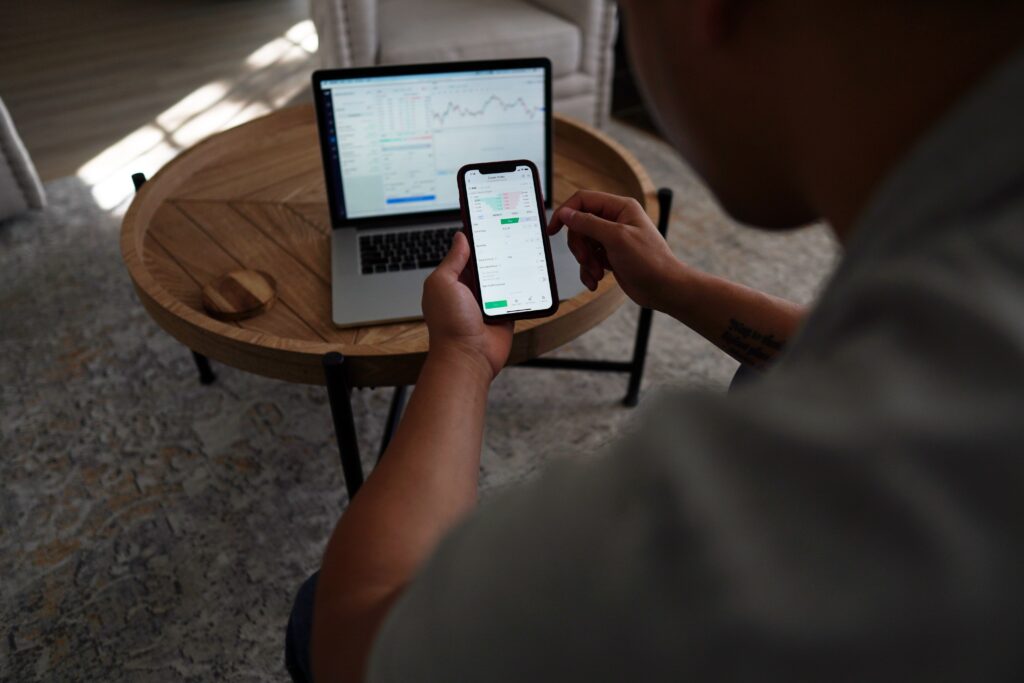
The biggest lie I believed about investing for years was that you needed a lot of money to get started. Furthermore I assumed investing was something wealthy people did with their spare thousands while the rest of us just tried to make ends meet. However the day I discovered I could invest my first dollar using a smartphone app completely changed my perspective on building wealth. Moreover I realized that waiting until I had enough money to invest was the very reason I never had enough money. In this complete guide I share exactly how to start investing with no money in 2026 so you never have to wait another day to begin building wealth.
Learning how to invest with no money is one of the most important financial skills you can develop in 2026. Furthermore the traditional barrier to investing of needing hundreds or thousands of dollars to get started has been completely eliminated by modern technology and financial innovation.
Today you can start investing with as little as $1. Moreover fractional shares allow you to own a piece of Amazon, Apple, or any company regardless of their share price. Additionally micro investing apps round up your everyday purchases and invest the spare change automatically. Consequently the only thing standing between you and your first investment is the decision to start.
In this complete beginner guide we cover every realistic method for starting to invest with no money including the best apps, the right accounts to open, and the strategies that give you the best chance of building meaningful wealth over time.
Why Starting to Invest With No Money Matters So Much
Before diving into the specific methods it is worth understanding why starting to invest now matters so much even if the amounts seem tiny at first. Furthermore the mathematics of compound interest make starting early dramatically more valuable than waiting until you have more money.
The power of starting early:
| Monthly Investment | Starting Age | Portfolio at Age 65 (7% return) |
|---|---|---|
| $25 per month | Age 25 | $65,000 |
| $25 per month | Age 35 | $30,000 |
| $25 per month | Age 45 | $13,000 |
| $100 per month | Age 25 | $262,000 |
| $100 per month | Age 35 | $121,000 |
Moreover these numbers reveal something crucial. Furthermore starting at 25 with just $25 per month produces more than double the wealth of starting at 35 with the same amount. Consequently every year you wait to start investing costs you far more than the small amounts you would have invested.
Additionally the habit of investing matters as much as the amount. Moreover people who start investing small amounts early develop the discipline and knowledge that allows them to scale their investments significantly as their income grows over time.
The Truth About Investing With No Money
When we say investing with no money we mean investing with very little money rather than literally zero dollars. Furthermore most of the methods in this guide work with as little as $1 to $5 to get started. Moreover none of them require the hundreds or thousands of dollars that traditional investing once demanded.
Additionally investing with small amounts does require realistic expectations. Furthermore $1 invested today will not make you rich quickly. However $1 invested today combined with consistent monthly contributions and decades of compound growth can genuinely transform your financial future.
The key mindset shift is this: the amount you start with matters far less than starting at all. Moreover building the habit, learning the process, and getting your money working for you even in tiny amounts creates the foundation for everything else.
Best Ways to Invest With No Money in 2026
1. Use Micro Investing Apps
Micro investing apps are specifically designed for people who want to start investing with very small amounts. Furthermore they remove every traditional barrier to entry including minimum investment requirements, complex account setup processes, and the need for financial knowledge.
How micro investing apps work:
Most micro investing apps use one or more of these methods to help you invest small amounts consistently:
Round up investing: The app connects to your bank account or debit card and rounds up every purchase to the nearest dollar. Moreover the difference is automatically invested. For example if you spend $3.75 on coffee the app rounds up to $4.00 and invests $0.25 automatically. Consequently your spare change accumulates into a real investment portfolio without you thinking about it.
Recurring small contributions: Set up automatic weekly or monthly contributions as small as $1 to $5. Furthermore these small consistent contributions add up significantly over time through the power of compound growth.
One time contributions: Invest any amount whenever you choose with no minimums or maximums.
Best micro investing apps in 2026:
Acorns:
Acorns is one of the most popular micro investing apps using the round up method. Moreover it automatically invests your spare change into a diversified portfolio of ETFs based on your risk tolerance. Furthermore Acorns charges $3 per month for its basic plan which is worth it once your balance exceeds approximately $1,500 but may be proportionally expensive on very small balances.
Stash:
Stash combines micro investing with financial education and allows you to invest in fractional shares of individual stocks and ETFs. Furthermore it starts at $3 per month and offers a banking account with Stock Back rewards that automatically invest a percentage of your debit card purchases.
Robinhood:
Robinhood offers commission free investing with no account minimum and fractional shares starting at $1. Moreover it is one of the most beginner friendly platforms available and has no monthly fees making it particularly cost effective for very small investment amounts.
How much can micro investing grow:
Someone who saves and invests $2 per day through round ups and small contributions invests approximately $60 per month. Furthermore at a 7 percent average annual return that $60 per month grows to over $72,000 in 30 years. Consequently what feels like pocket change today can become meaningful wealth over time.
2. Invest in Fractional Shares
Fractional shares are one of the most powerful innovations in investing for people with little money. Furthermore they allow you to buy a fraction of a single share of any company regardless of how expensive that share is.
Why fractional shares matter:
Without fractional shares buying stock in expensive companies was impossible for small investors. For example a single share of Amazon costs over $180 and a single share of some companies costs hundreds or thousands of dollars. Moreover this price barrier excluded many people from investing in the world’s best companies.
With fractional shares you can invest $5 in Amazon, $10 in Apple, or $1 in any company you choose. Furthermore you own a proportional fraction of that share and receive proportional dividends and price appreciation. Consequently the price of individual shares is now completely irrelevant to your ability to invest in any company.
Best platforms for fractional shares:
Fidelity: Offers fractional shares called Fidelity Stocks by the Slice with investments starting at $1. Furthermore Fidelity has no account minimums, no commission fees, and is one of the most trusted brokerages in the world.
Charles Schwab: Offers fractional shares called Schwab Stock Slices with no account minimum and commission free trading. Moreover Schwab is another highly trusted established brokerage with excellent educational resources for beginners.
Robinhood: Commission free fractional share investing starting at $1 with an extremely beginner friendly mobile app interface.
M1 Finance: Allows you to create a portfolio of fractional shares called a pie and automatically rebalances it for free. Furthermore M1 Finance has no commission fees and no management fees making it highly cost effective for small investors.
3. Open a Roth IRA and Start With $1
A Roth IRA is one of the most powerful investment accounts available and several major brokerages now allow you to open one with no minimum deposit. Furthermore the tax advantages of a Roth IRA make it particularly valuable for young investors with lower current incomes.
Why a Roth IRA is perfect for beginners with no money:
Contributions to a Roth IRA are made with after tax dollars. Moreover all growth inside the account is completely tax free. Consequently when you withdraw money in retirement you pay zero taxes on everything including all the decades of investment growth.
Additionally Roth IRA contributions (not earnings) can be withdrawn at any time penalty free. Furthermore this flexibility makes the Roth IRA less intimidating for beginners who worry about locking money away permanently.
How to open a Roth IRA with no money:
- Choose a brokerage with no minimum deposit such as Fidelity, Schwab, or Vanguard
- Visit their website and click open an account
- Select Roth IRA as the account type
- Complete the application with your personal information
- Link your bank account
- Make your first contribution of any amount starting from $1
What to invest in inside your Roth IRA:
For beginners with small amounts a single target date fund or total market index fund is the simplest and most effective choice. Furthermore these funds provide instant diversification across hundreds or thousands of companies with a single investment. Moreover they require no ongoing management or rebalancing making them perfect for beginner investors.
4. Use Your Employer’s 401k Plan
If your employer offers a 401k plan this is often the very best place to start investing with no money because of the employer match benefit. Furthermore a 401k allows you to invest pre tax dollars which reduces your current taxable income meaning the government is effectively contributing to your investment.
The employer match is free money:
Many employers match a percentage of your 401k contributions. Moreover this match is an immediate guaranteed return on your investment that no other investment can replicate. For example if your employer matches 50 percent of contributions up to 3 percent of your salary and you earn $3,000 per month:
- You contribute 3 percent which is $90 per month
- Your employer adds 50 percent which is $45 per month
- Total invested: $135 per month
- Your actual cost: $90 per month
- Immediate return on investment: 50 percent
Furthermore contributing enough to capture your full employer match should always be the first investing priority regardless of how small the amount. Consequently never leave employer matching contributions unclaimed as this is genuinely free money.
How to start:
- Contact your HR department or payroll provider
- Ask about your employer’s 401k plan and matching policy
- Set your contribution percentage to at least the minimum needed to capture the full employer match
- Choose a target date fund if you are unsure what to invest in
5. Invest Your Spare Change Consistently
One of the most psychologically effective ways to start investing with no money is to commit to investing your spare change and any small windfalls rather than spending them. Furthermore these small amounts feel insignificant individually but accumulate significantly over time.
Spare change investing strategies:
The $5 rule: Every time you have a $5 bill transfer $5 to your investment account. Moreover this simple rule makes investing automatic and painless because $5 feels insignificant to spend but meaningful when invested consistently.
The 1 percent rule: Invest exactly 1 percent of every paycheck regardless of how small that amount is. Furthermore 1 percent of a $2,000 paycheck is just $20 but $20 invested every two weeks grows to over $24,000 in 30 years at 7 percent annual returns.
Windfall investing: Commit to investing a fixed percentage of any unexpected money you receive. Moreover this includes tax refunds, birthday gifts, work bonuses, or any money you were not expecting. Consequently investing windfalls rather than spending them dramatically accelerates portfolio growth without affecting your regular lifestyle.
No spend day investing: Every day you successfully complete a no spend day transfer a set amount to your investment account. Furthermore this strategy makes investing feel like a reward for good financial behavior.
6. Try Investment Apps That Offer Sign Up Bonuses
Several investing platforms offer sign up bonuses that effectively allow you to start investing with truly zero of your own money. Furthermore these bonuses give you an initial investment to learn the platform before committing your own funds.
Platforms with sign up bonuses in 2026:
Many brokerages and investing apps offer promotions such as free stock for new accounts, cash bonuses for making a first deposit, and matching contributions for initial investments. Furthermore these offers change frequently so searching for current promotions on platforms like Robinhood, Webull, and Public before signing up can result in a meaningful bonus to start your investment journey.
Important note: Always read the terms of any bonus carefully. Moreover some bonuses require keeping the investment for a minimum period before withdrawing. Furthermore sign up bonuses are a great way to get started but should not be the primary reason for choosing a long term investment platform.
7. Reinvest Dividends Automatically
Once you have made your first investment however small enabling dividend reinvestment is one of the most powerful wealth building tools available. Furthermore dividend reinvestment means that any dividends your investments earn are automatically used to purchase additional shares rather than being paid out as cash.
Why dividend reinvestment matters:
Dividend reinvestment accelerates compound growth significantly. Moreover even a small portfolio earning modest dividends grows faster with reinvestment than without it. Furthermore over long periods the difference between reinvesting and not reinvesting dividends is enormous.
Most brokerages offer automatic dividend reinvestment (DRIP) as a free feature. Additionally enabling it requires a single setting change in your account and then works automatically forever. Consequently enabling DRIP immediately after opening your account is one of the highest leverage low effort actions available to any investor.
What to Invest In When You Have No Money
Choosing what to invest in is often the most confusing part for beginner investors. Furthermore with very small amounts the choice of investment matters significantly because fees can disproportionately impact small portfolios.
Best investments for beginners with no money:
Total market index funds:
These funds invest in hundreds or thousands of companies simultaneously providing instant diversification. Furthermore they charge very low fees typically below 0.1 percent annually and have historically produced strong long term returns. Moreover they require no ongoing management making them perfect for beginners.
Top options include:
- Fidelity ZERO Total Market Index Fund (FZROX): Zero expense ratio
- Vanguard Total Stock Market ETF (VTI): 0.03 percent expense ratio
- Schwab Total Stock Market Index Fund (SWTSX): 0.03 percent expense ratio
Target date funds:
These funds automatically adjust their investment mix as you approach retirement becoming more conservative over time. Furthermore they are the ultimate set and forget investment requiring no decisions or rebalancing. Consequently they are ideal for complete beginners who want a single simple investment that handles itself.
S&P 500 index funds:
These funds track the 500 largest US companies and have historically returned approximately 10 percent annually over long periods. Moreover they are among the most widely held and trusted investments in the world.
Common Mistakes Beginners Make When Investing With No Money
Waiting until you have more money:
This is the most common and most costly mistake. Furthermore every month you delay investing is a month of compound growth you never recover. Moreover the habit of investing is worth more than the amount you invest in the early stages.
Choosing high fee investments:
Fees are particularly damaging to small portfolios. Furthermore a 1 percent annual fee on a $100 portfolio costs only $1 per year but a 1 percent fee on a $100,000 portfolio costs $1,000. Consequently choosing low cost index funds with fees below 0.2 percent is essential especially when starting small.
Checking your portfolio too often:
Short term market fluctuations are normal and expected. Moreover checking your portfolio daily when starting with small amounts leads to emotional decisions and anxiety about normal market movements. Furthermore investing with a long term perspective and checking your portfolio monthly at most produces better outcomes for most beginner investors.
Stopping during market downturns:
Market downturns feel frightening especially when you are new to investing. However continuing to invest during downturns means buying more shares at lower prices which accelerates long term wealth building. Consequently staying consistent through market volatility is one of the most important investing habits to develop from the beginning.
Not increasing contributions over time:
Starting with $1 per month is a great beginning but increasing your contributions as your income grows is essential for building meaningful wealth. Furthermore committing to increasing your investment amount by even $10 to $25 per month each year produces dramatically different long term outcomes.
How to Go From Zero to Your First $1,000 Invested
Here is a realistic step by step plan for reaching your first $1,000 invested starting from zero:
| Month | Action | Running Total |
|---|---|---|
| Month 1 | Open Roth IRA at Fidelity, invest $50 | $50 |
| Month 2 | Set up $25 per week automatic investment | $150 |
| Month 3 | Enable round ups on Acorns, add $25 extra | $300 |
| Month 4 | Increase weekly contribution to $50 | $525 |
| Month 5 | Invest tax refund or any windfall | $725 |
| Month 6 | Continue $50 per week contributions | $1,000 |
Moreover reaching your first $1,000 invested is a significant psychological milestone. Furthermore the habits built during this journey make every subsequent $1,000 easier and faster to accumulate. Consequently celebrating this milestone and immediately setting the next goal keeps momentum building.
CONCLUSION:
Learning how to invest with no money is no longer a theoretical concept. Furthermore it is a completely practical reality in 2026 with platforms that accept $1 minimum investments, fractional shares that let you own pieces of any company, and apps that automatically invest your spare change.
Moreover the most important investing decision you will ever make is starting today rather than waiting for a better time, a higher income, or a larger amount to invest. Furthermore compound interest works most powerfully over the longest time periods meaning every day you delay is a day of growth you never recover.
Open a free account at Fidelity or Robinhood today. Moreover invest your first $5 or $10 in a total market index fund. Additionally set up a small automatic weekly contribution and enable dividend reinvestment. Consequently your investment journey will have begun and every step forward from that point builds on the foundation you created today.
What is stopping you from making your first investment today? Share in the comments and let us know how we can help you get started!
Frequently Asked Questions
Q: Can you really start investing with no money?
A: Yes genuinely. Furthermore several major brokerages including Fidelity and Charles Schwab have eliminated minimum deposit requirements entirely allowing you to open an investment account and make your first investment with as little as $1. Moreover micro investing apps like Acorns and Robinhood are specifically designed for people starting with very small amounts. Consequently the only thing you need to start investing today is the decision to begin.
Q: What is the best app to invest with no money?
A: For complete beginners Fidelity is the best overall choice because it has no account minimum, no commission fees, fractional shares starting at $1, and excellent educational resources. Furthermore it is one of the most trusted brokerages in the world with no monthly fees making it particularly cost effective for small investment amounts. Additionally Robinhood is a good alternative with an extremely user friendly mobile app that appeals to younger investors.
Q: Is it worth investing small amounts like $10 or $25?
A: Absolutely yes for two reasons. Furthermore first the habit of investing consistently matters more than the amount especially in the early stages. Moreover second compound interest makes even small amounts grow significantly over long periods. A $25 monthly investment started at age 25 grows to over $65,000 by age 65 at a 7 percent average return. Consequently even the smallest regular investment is worth making.
Q: What should a complete beginner invest in?
A: A complete beginner with a small amount should invest in a single low cost total market index fund or target date fund. Furthermore these funds provide instant diversification across hundreds of companies, charge minimal fees typically below 0.1 percent annually, and require no ongoing management or financial knowledge to maintain. Moreover the Fidelity ZERO Total Market Index Fund charges literally zero in annual fees making it particularly suitable for small beginners.
Q: How much money do I need to start investing in stocks?
A: With fractional shares available at most major brokerages you can invest in individual stocks with as little as $1. Furthermore platforms like Fidelity, Schwab, Robinhood, and M1 Finance all offer fractional share investing with no minimum. Consequently the price of individual stocks is completely irrelevant to your ability to invest in them today. A single Apple share costing over $200 can be purchased for $5 by buying a fractional share representing 2.5 percent of one full share.

Muhammad Mateen is a personal finance blogger and the founder of Simply Saving More. After struggling with budgeting and saving money for years Muhammad developed practical strategies that helped him take control of his finances. He created Simply Saving More to share these real world tested tips with everyday people who want to improve their financial lives. His content focuses on practical actionable advice that anyone can implement regardless of income level.

Treating spare-change investing as a reward for no-spend days turns small habits into visible long-term progress.
Pingback: What Is Moneymaxxing? 9 Ways to Start in 2026