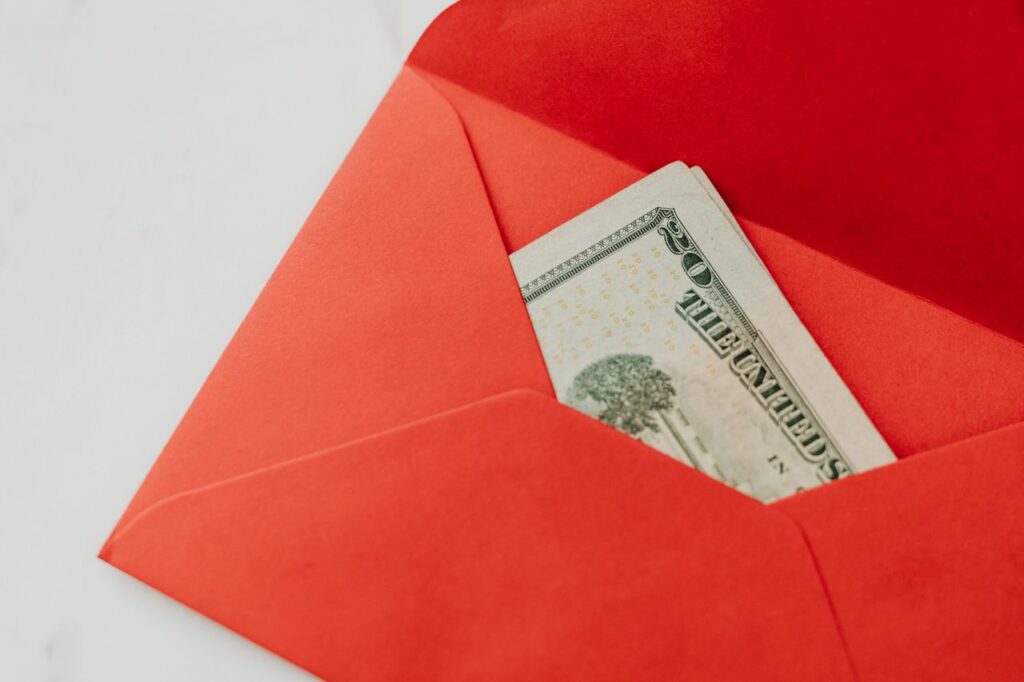
I tried every digital budgeting app available before I finally admitted that none of them were actually stopping me from overspending. I could see exactly where my money was going in beautiful color coded charts and still somehow spend more than I planned every single month. The day I switched to cash stuffing everything changed. There is something about physically handing over cash that makes spending feel real in a way that tapping a card never does. In this complete guide I share exactly how to start cash stuffing from scratch even if you have never budgeted with cash before.
Cash stuffing is the budgeting method that has taken TikTok and Instagram by storm with millions of videos showing people organizing their money into labeled envelopes. But behind the satisfying aesthetics and colorful binder setups is a genuinely powerful budgeting system that has been helping people stop overspending and save more money for decades.
The core idea is simple. Instead of tracking your spending digitally after the fact you withdraw your budget in cash at the start of each month and physically divide it into envelopes for each spending category. When the cash in an envelope is gone the spending in that category stops for the month. No exceptions.
This physical limitation is exactly what makes cash stuffing so effective for people who struggle with overspending. You cannot accidentally overspend when there is literally no more money in the envelope.
In this complete beginner guide we walk you through everything you need to know to start cash stuffing today including how to set up your system, which categories to use, and how to handle common challenges.
What Is the Cash Stuffing Method?
Cash stuffing is a physical envelope budgeting system where you:
- Decide your budget categories and amounts at the start of each month
- Withdraw all your variable spending money in cash from the bank
- Divide the cash into labeled envelopes one for each spending category
- Only spend the cash from the relevant envelope for each purchase
- When an envelope is empty that category spending stops for the month
- Any leftover cash at month end goes to savings or rolls over to next month
The method is also known as the envelope budgeting system or cash envelope method. It was popularized by personal finance expert Dave Ramsey but has existed in various forms for generations. The recent TikTok trend has introduced cash stuffing to millions of younger people who discovered that physical cash management is more effective than digital tracking for controlling spending.
Why Cash Stuffing Works So Well
Cash stuffing is not just a social media trend. There is genuine psychology and research behind why spending cash feels different from spending digitally.
The pain of paying:
Research consistently shows that spending cash activates pain centers in the brain in a way that digital payments do not. This psychological friction makes you think more carefully before spending and naturally reduces impulse purchases.
Clear visual limits:
When you can see exactly how much money remains in your grocery envelope you make different decisions than when you are relying on mental math or checking a budgeting app. The visual nature of cash creates natural spending limits that feel real and immediate.
No overspending by accident:
With digital payments it is easy to accidentally overspend a budget category without realizing it until you check your app days later. With cash stuffing overspending is physically impossible. The money simply runs out.
Forces intentional decisions:
Every time you reach into an envelope you are making a conscious intentional choice about spending. This mindfulness around money decisions is one of the most powerful changes cash stuffing creates.
Makes budgeting tangible:
Many people struggle with budgeting because it feels abstract. Cash stuffing makes your budget completely concrete. You can hold it, see it, and feel it which creates a level of engagement with your finances that apps simply cannot replicate.
What You Need to Start Cash Stuffing
The beauty of cash stuffing is that it requires almost nothing to get started. Here is everything you need:
Essential supplies:
Envelopes: Plain white envelopes from any stationery store work perfectly. You can also buy decorative budget envelopes or printable envelope templates online. Many cash stuffers use A2 or A6 sized envelopes which fit neatly into a binder.
Labels or marker: Label each envelope clearly with its spending category and monthly budget amount.
A storage system: This can be as simple as a rubber band holding your envelopes together or as elaborate as a dedicated cash stuffing binder with clear plastic sleeves for each envelope.
A tracking sheet: Optional but helpful. A simple notepad or printed tracking sheet where you record what you spend from each envelope throughout the month.
Optional supplies for a binder setup:
Many cash stuffers use a dedicated binder system which has become iconic in the TikTok cash stuffing community:
- A ring binder or zipper binder
- Clear plastic cash envelope sleeves sized for the binder
- Printed or decorative envelopes
- A budget tracking sheet
- Pen or marker for labeling
- Dividers for different envelope categories
You do not need to buy an expensive binder setup to start. Start with plain envelopes and upgrade your system once you know cash stuffing works for you.
How to Set Up Your Cash Stuffing System Step by Step
Step 1: Calculate your monthly take home income
Start with your actual take home pay after taxes and deductions. If your income varies calculate a conservative estimate based on your lowest expected month. If you are paid bi weekly multiply one paycheck by 2.17 to get your monthly equivalent.
Step 2: List all your fixed expenses
Fixed expenses are bills that stay the same every month and are typically paid by bank transfer or direct debit rather than cash. These do not go in envelopes:
- Rent or mortgage
- Car payment
- Insurance premiums
- Loan minimum payments
- Utility bills
- Phone plan
- Internet service
Subtract your total fixed expenses from your monthly income to find your variable spending money. This is the amount you will withdraw in cash and divide into envelopes.
Step 3: Choose your cash stuffing categories
Your categories should reflect your actual spending patterns. Common cash stuffing categories include:
| Category | What It Covers |
|---|---|
| Groceries | All food purchased at supermarkets |
| Dining out | Restaurants, takeout, coffee shops |
| Fuel or transport | Petrol, bus fares, parking |
| Personal care | Haircuts, toiletries, cosmetics |
| Entertainment | Movies, events, subscriptions paid in cash |
| Clothing | All clothing and accessories |
| Household | Cleaning supplies, home items |
| Health and medical | Copays, prescriptions, gym |
| Kids | School supplies, activities, clothing |
| Pets | Food, vet visits, grooming |
| Miscellaneous | Anything that does not fit other categories |
| Savings | Emergency fund or specific savings goal |
| Fun money | Guilt free spending for each person |
Start with 6 to 8 categories maximum when you are beginning. Too many categories makes the system complicated and harder to maintain.
Step 4: Set your budget amounts for each category
Look at your past 3 months of bank statements to understand what you actually spend in each category. Set realistic budget amounts rather than aspirational ones. You can tighten your budgets over time as you get comfortable with the system.
Make sure your category totals add up to the variable spending money available after fixed expenses. If they do not adjust categories until they balance.
Step 5: Set up your envelopes
Label each envelope with:
- The category name
- The monthly budget amount
- The current month and year
Some cash stuffers also write a tracking grid on the back of each envelope to record individual transactions.
Step 6: Withdraw your cash
Go to your bank or ATM and withdraw the total amount you need for all envelopes. Try to get the right denomination of bills to make dividing the money easier. For example if your grocery budget is $350 ask for $300 in twenties and $50 in tens.
Step 7: Stuff your envelopes
Divide your cash into each labeled envelope according to your budget. This is the satisfying moment the TikTok videos are all about. Take your time and count the cash carefully before sealing or storing each envelope.
Step 8: Use the system throughout the month
Before any variable spending reach for the appropriate envelope. Pay with cash from that envelope. If you are at a store that does not accept cash you can use your card and immediately remove the equivalent cash from the envelope when you get home transferring it to a designated reimbursement pouch to deposit back to your bank.
Cash Stuffing Categories for Beginners
If you are just starting out keep it simple. Here is a beginner friendly set of 7 categories:
Groceries:
This is usually the biggest variable expense category. Include everything bought at the supermarket including household cleaning items if you buy them there. Set a realistic weekly amount and multiply by 4.3 for your monthly budget.
Dining and takeout:
Keep this separate from groceries so you can see clearly how much you spend eating out versus cooking at home. This category is often the biggest shock for new cash stuffers.
Transport:
Fuel, parking, public transport, and rideshare costs. If you drive to work track your average monthly fuel spending over 3 months to set an accurate budget.
Personal care:
Haircuts, toiletries, cosmetics, and personal hygiene products. Many people underfudget this category initially so review your actual spending carefully.
Entertainment and fun:
Movies, events, hobbies, and any leisure activities. This should include a personal allowance for both you and your partner if applicable. Fun money that each person can spend without accountability to the other prevents budgeting burnout.
Household and miscellaneous:
Home supplies, small household items, and anything that does not fit neatly into other categories. Having a miscellaneous category prevents the system from breaking down every time an unusual expense comes up.
Savings:
Put a savings envelope in your system from day one even if the amount is small. Treating savings like an expense that must be funded every month is one of the most powerful habits in personal finance.
How to Handle Common Cash Stuffing Challenges
Challenge: What if I run out of cash in an envelope before month end?
This is the most common challenge for new cash stuffers and it is actually where the real benefit of the system comes through.
Option 1: Stop spending in that category for the month. This is the purest form of cash stuffing and the most effective at changing behavior.
Option 2: Transfer cash from your miscellaneous or fun money envelope to cover the shortfall. Only do this as a last resort for genuine needs not wants.
Option 3: Review whether your budget for that category was realistic and adjust next month.
What you should not do: Use your card to top up spending in a category when the envelope is empty. This defeats the entire purpose of the system.
Challenge: What about online purchases?
Online shopping is the biggest practical challenge with cash stuffing. Here are three approaches:
Approach 1: Use your card for online purchases and immediately remove the equivalent cash from the relevant envelope putting it in a designated reimbursement envelope to deposit at the bank.
Approach 2: Maintain a small digital spending allowance separate from your cash system for online only purchases.
Approach 3: Use prepaid debit cards loaded with each category’s budget amount for online shopping.
Challenge: What about bills that vary month to month?
Some bills like electricity fluctuate month to month. Handle these by calculating an annual average and setting aside that monthly average amount in a dedicated envelope. In months when the bill is lower than your average the extra cash stays in the envelope building up a buffer for higher months.
Challenge: Carrying cash feels unsafe
Many people feel uncomfortable carrying large amounts of cash. Solutions include:
- Only withdraw cash weekly rather than monthly keeping smaller amounts on hand
- Keep your envelope system at home and only take out the specific envelope you need for planned shopping
- Use a zippered binder or wallet designed for cash stuffing that looks like a regular bag
- Consider a hybrid system where only your highest spending categories use cash
Challenge: My partner does not want to use cash
Cash stuffing works best when both people in a household are on board. If your partner is resistant start with just your personal spending categories using cash and let them manage their spending digitally. Show them the results after 2 to 3 months and let the evidence speak for itself.
Cash Stuffing vs Digital Budgeting Apps
| Feature | Cash Stuffing | Budgeting Apps |
|---|---|---|
| Overspending prevention | Very strong: physically impossible | Moderate: easy to ignore alerts |
| Convenience | Less convenient | Very convenient |
| Online shopping | Requires workaround | Seamless |
| Psychological impact | High: physical money feels real | Low: digital spending feels abstract |
| Setup time | 30 to 60 minutes per month | 15 to 30 minutes initial setup |
| Best for | Overspenders and beginners | Organized people who track naturally |
| Cost | Free | Free to $15 per month |
| Safety | Small risk of loss or theft | No physical risk |
The best approach for many people is a hybrid: use cash stuffing for the categories where you most struggle with overspending and digital tracking for everything else.
How Much Can Cash Stuffing Save You?
The results vary significantly by person but here are realistic outcomes for consistent cash stuffers:
| Spending Type | Average Monthly Overspend | Cash Stuffing Monthly Saving |
|---|---|---|
| Groceries | $50 to $150 | $50 to $150 |
| Dining out | $100 to $300 | $100 to $300 |
| Personal care | $30 to $100 | $30 to $100 |
| Entertainment | $50 to $150 | $50 to $150 |
| Miscellaneous impulse | $100 to $200 | $100 to $200 |
| Total potential | $330 to $900 per month | $330 to $900 per month |
Most new cash stuffers report saving $200 to $500 per month in their first month simply by becoming aware of their spending limits and stopping when the cash runs out.
Cash Stuffing Tips for Long Term Success
Make stuffing day special
Many cash stuffers turn their monthly stuffing day into a ritual. Make a cup of tea, put on your favorite show, and enjoy the process of organizing your money. The more enjoyable you make it the more likely you are to stick with it.
Take photos of your stuffed envelopes
Many people photograph their stuffed envelopes at the start of each month. This creates a visual record of your budget and provides satisfying before and after photos of your cash disappearing throughout the month.
Join the cash stuffing community
Search for cash stuffing on TikTok, Instagram, and YouTube. The community is enormous, supportive, and full of practical tips and motivation. Watching others stuff their envelopes is surprisingly motivating.
Do a mid month check in
Halfway through the month check each envelope to see where you stand. If a category is almost empty you have two weeks to slow down that spending. This mid month check prevents end of month scrambles.
Give yourself grace when you make mistakes
You will overspend an envelope. You will forget to take the right envelope to the shops. You will occasionally use your card when you should have used cash. These mistakes are normal especially in the first few months. Do not give up. Reset next month and keep going.
CONCLUSION:
Cash stuffing is one of the most effective budgeting methods available precisely because it works with human psychology rather than against it. The physical nature of cash creates spending limits that feel real and immediate in a way that digital tools simply cannot replicate for most people.
The setup takes about an hour the first time and gets faster every month. The results for most people start immediately with significantly less overspending in the first month.
Start simple. Choose 6 to 8 categories. Withdraw your cash. Stuff your envelopes. And experience what it feels like to have a budget that actually works.
Have you tried cash stuffing? Share your experience in the comments and let us know how much you saved in your first month!
Frequently Asked Questions
Q: How much cash should I withdraw for cash stuffing?
A: You should withdraw enough cash to cover all your variable spending categories for the month or pay period. To calculate this add up your budget amounts for all envelope categories. This is typically your take home income minus all your fixed bills like rent, utilities, and loan payments. For most people this ranges from $500 to $1,500 per month depending on income and lifestyle.
Q: Is cash stuffing safe? What if I lose the envelopes?
A: Cash stuffing does carry the risk of losing physical money unlike a bank account. To minimize this risk keep your envelope system stored at home and only take out the specific envelope you need for planned shopping. Some cash stuffers keep a photo record of their stuffed envelopes in case of loss. Consider withdrawing cash weekly rather than monthly to limit the amount of cash in your home at any one time if security is a concern.
Q: Can I do cash stuffing if I am paid bi weekly instead of monthly?
A: Yes and many people find bi weekly cash stuffing easier to manage than monthly. Simply divide your monthly budget by 2 and stuff envelopes on each payday. Some categories like groceries and fuel work naturally on a bi weekly cycle. For monthly bills that fall between paydays keep a designated envelope for those funds and do not touch them until the bill is due.
Q: Do I need a special binder or can I use regular envelopes?
A: You absolutely do not need a special binder to start cash stuffing. Plain white envelopes from any stationery store work perfectly well. Many experienced cash stuffers use regular envelopes and find them just as effective as expensive binder systems. Start with what you have and only invest in a nicer setup if you enjoy the system and want to upgrade your experience.
Q: What happens to leftover cash at the end of the month?
A: Leftover cash in envelopes at the end of the month can be handled several ways. The most popular approach is to roll it over into next month’s envelope for the same category giving you a buffer for higher spending months. Alternatively you can transfer all leftover cash to your savings envelope or emergency fund. Some people use end of month leftover cash as a reward putting it toward a specific savings goal like a holiday or an emergency fund contribution.

Muhammad Mateen is a personal finance blogger and the founder of Simply Saving More. After struggling with budgeting and saving money for years Muhammad developed practical strategies that helped him take control of his finances. He created Simply Saving More to share these real world tested tips with everyday people who want to improve their financial lives. His content focuses on practical actionable advice that anyone can implement regardless of income level.


Pingback: What Is Moneymaxxing? 9 Ways to Start in 2026
Pingback: Holiday Budget 2026: How to Avoid Holiday Debt